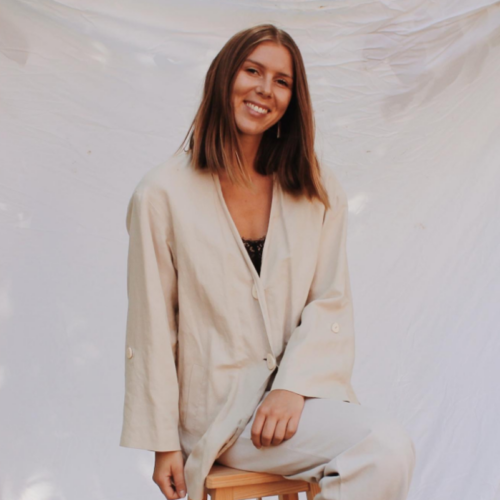
When you shop online, you never really know what to expect, but you're easily swayed by the featured images. Clothes bought during your online window shopping session are always beautifully presented, and it's easy to imagine yourself in them. Except that, very often, the garment you order doesn't look anything like it did on the model who caught your eye. And it's not our body that's the problem.
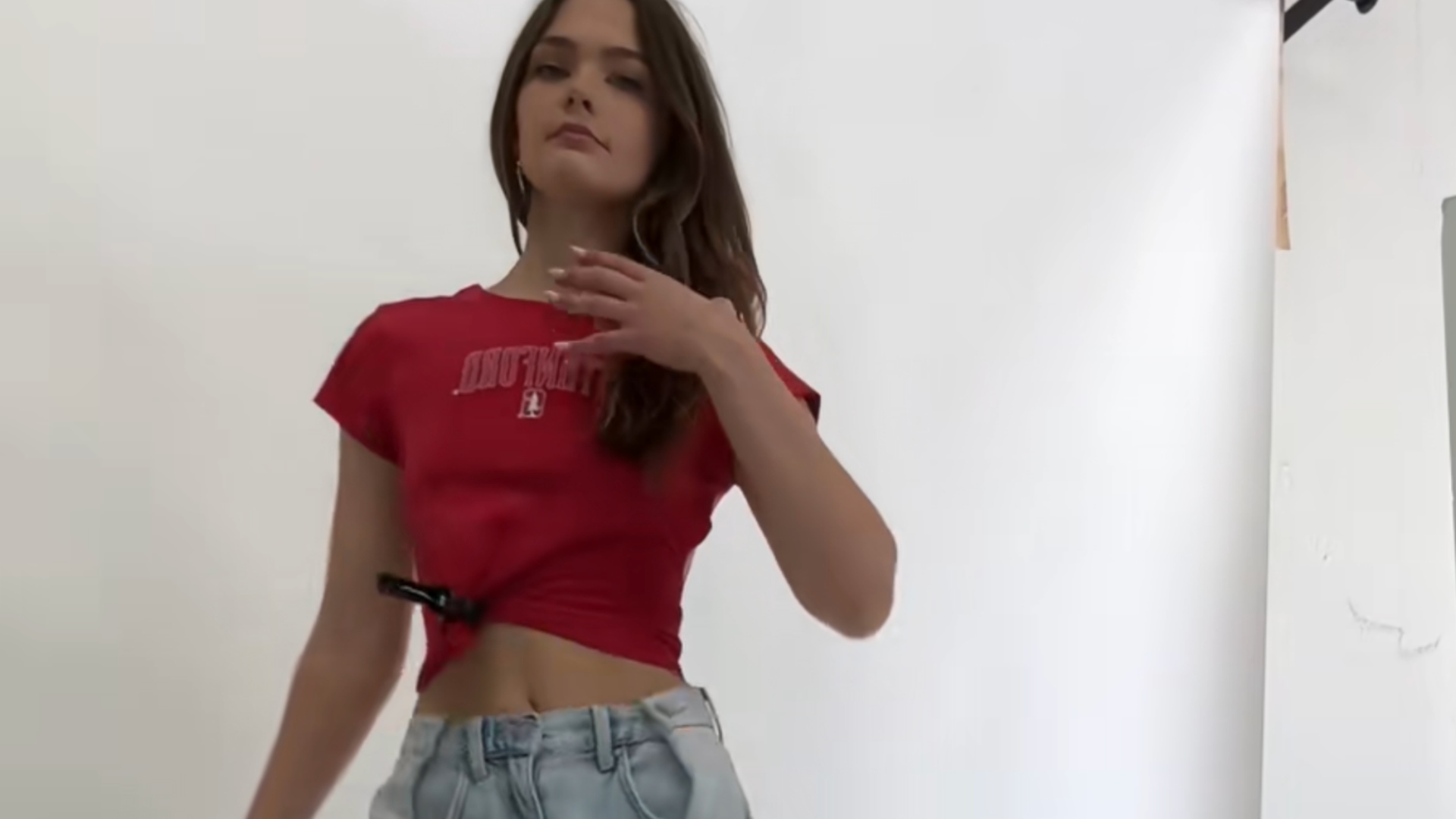
An extremely precise adjustment using clips and pins.
When you receive a garment you bought online, you're as happy as a little girl on Christmas morning. Except that when you try it on , the euphoria vanishes immediately. Despite carefully checking the size chart and meticulously measuring your measurements with a tape measure, the garment is a complete disappointment.
The seams are completely out of sync with our silhouette, and the design seems incompatible with our body shape. The sleeves are too tight, the pant legs hang off our feet, and the top makes absolutely no sense. Yet, on the model, the garment followed her body's lines perfectly. It even looked as if it had been sewn onto her skin. This leads us to the most obvious conclusion: our bodies aren't suited to this garment. However, even the models on screen who wear a size 6 need some adjustments. The stylists in charge of the commercial design "improve" reality.
The unspoken truth: the clothes featured on websites don't always look perfect on the models either. Industry professionals, who ensure the garment sells well, use clips to hold it in place during a photoshoot and give it a more flattering shape. This is demonstrated in a video of model Arabella Rae, in which she's seen with about ten clips in her back, like a piece of laundry on a drying rack. "Don't worry if it doesn't look the same as on the website," she reassures viewers.
@arabellavanderzee Clipped in EVERY outfit. Don't beat yourself up if it doesn't look like the website #fyp #trending #xyzcba #mexico #mexicocity #cdmx #modeling #models#model #reality #photography #ecom #ecommerce #groupshot #relatable ♬ original sound - smk_deezyy
A video to show the behind-the-scenes of these perfect images
The model isn't the only one to have revealed the behind-the-scenes secrets. Others have also disclosed this stylistic technique, which is an open secret in the industry. For example, model Lexie Tapper also turned around in front of the camera to reveal this special hairstyle. These images, which reinforce women's insecurities and lead them to believe that their bodies are to blame for this poor drape, are dishonest. It's a bit like the overuse of retouching and the countless virtual facelifts that make us believe in demigoddesses who have been through the Photoshop wringer.
However, this aesthetic strategy, which goes unnoticed during our online shopping, is almost the norm. It used to be a profession in its own right. People were tasked with overseeing every little detail of style and checking the garment's appearance, like "finished-work inspectors." This is what photographer Sonja Ruckstuhl recounts in the pages of 20 Minutes .
Her colleague, Brigitte Aeschbach, defends this carefully crafted little ritual. According to her, the goal is not to reflect an ideal or to optimize the garment. "By adapting the garment, the model herself often becomes more visible. It's a handcrafted process that works with real bodies and highlights personality and physique without distorting them," she argues.
Internet users have mixed feelings about this fashion practice.
In the comments section, reactions from internet users are very mixed. Some are relieved to learn that even the models aren't perfectly in sync with the clothes. Others lament a lack of authenticity and compare this trick to disguised fraud. "It should have been illegal," fumes one subscriber. "Isn't this a form of false advertising?" asks another. Amid these harsh opinions, there are also positive remarks. "Wow, that cured me!" says one user, happy to see that these images aren't as utopian as they claim. The more pragmatic ones, meanwhile, recommend reading reviews to avoid disappointment when trying things on.
When we buy clothes online, we fall in love with a garment and hope to achieve the same result as in the example photo. These videos are primarily intended to reassure women, who tend to blame their bodies when the problem lies with the design. "Mainstream" clothing isn't designed to highlight our unique features. It's designed to be minimally acceptable on as many body types as possible.
Behind a photo of clothing online, there isn't just a "lucky" or "ideal" body. There's a whole invisible, technical process that transforms a simple garment into a desirable product. And this transformation completely changes the perception of how it hangs.