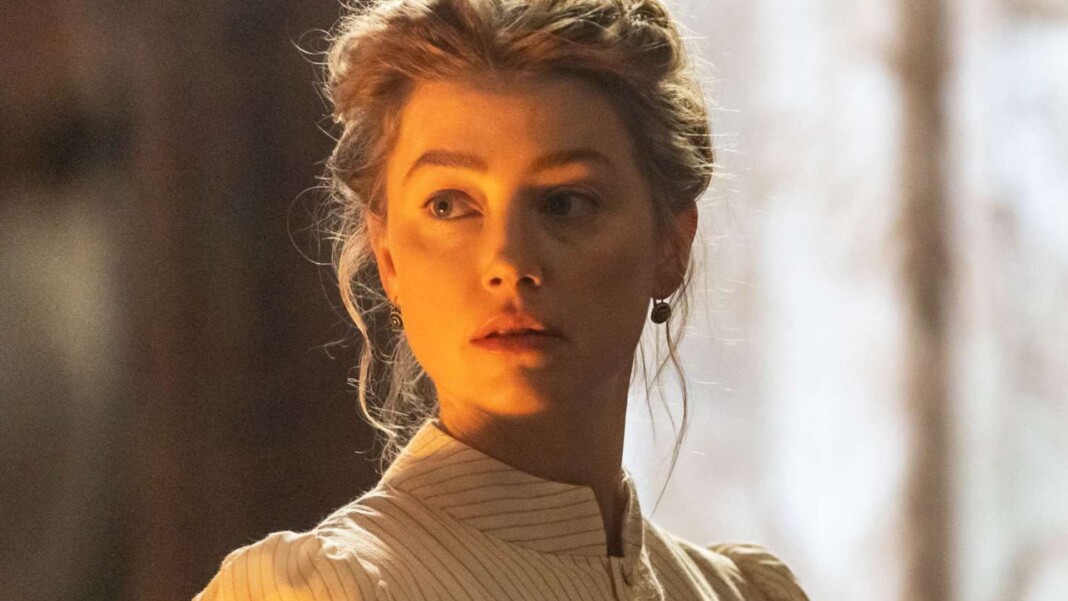
American actress and producer Amber Heard breaks her silence once again in "Silenced," a documentary in which she sheds light on the devastating psychological consequences of massive online harassment, triggered after her highly publicized trial against Johnny Depp. She sees it less as a personal case than as a magnifying glass reflecting the experiences of so many women in the public eye—especially when they speak out against abuse.
A documentary to express the impossibility of speaking
In "Silenced," Amber Heard reflects on the aftermath of the trial, but above all on the extent of the online lynching she says she endured. This harassment, she explains , silenced her. After being punished online for testifying, the fear of another digital onslaught—a "shitstorm"—now prevents her from speaking out.
This paradox becomes the heart of the documentary "Silenced": a woman who spoke out about violence is symbolically "condemned to silence." Amber Heard highlights a cruel contradiction of our time: women are criticized for speaking out "too late," yet they are violently punished as soon as they do.


The Depp-Heard trial, a catalyst for digital hate
Amber Heard insists: the trial was not simply a legal battle between two ex-spouses. It became a platform for unbridled expression for antifeminist communities and organized fan groups. On social media, the actress was reduced to the archetype of the "bad victim," the target of viral, often misogynistic, smear campaigns.
She points out that Johnny Depp had lost a defamation case in the UK two years earlier for domestic violence. This ruling, however, did not prevent a large segment of the public from rejecting her testimony. For Amber Heard, this reaction reflects "a disturbing reality": the truth carries little weight in the face of a digital culture quick to hate women rather than question power dynamics.
A well-oiled sexist machine
In her statements, Amber Heard describes a pattern of harassment "deeply structured by misogyny": sexist insults, manipulated and humiliating videos, mocking hashtags, and viral rumors. She says she stands "in solidarity with other women," such as Meghan Markle, who have also been disproportionately targeted.
What she experienced, she asserts , is merely the most amplified version of a much larger phenomenon. Behind her experience lies a recurring pattern: systematic discrediting, widespread suspicion, and social punishment inflicted on women who dare to speak out about violence.
A weakened voice… but still political
Amber Heard confides that she no longer wishes to speak about the case, not for lack of words, but because she can no longer bear the emotional and professional toll of each public statement. And yet, she understands the political significance of her testimony: it highlights how our society treats those who dare to challenge the impunity of powerful men. Her reflections extend those of the #MeToo movement, while also revealing its limitations: as long as the price of speaking out remains systematic harassment, women's freedom of expression remains, in practice, hampered.
A concern for future generations
Underlying her words is Amber Heard's fear for her daughter. She worries about her growing up in a world where power imbalances remain profound, despite the progress claimed. The media and legal ordeal she endured, she believes, confronted her with the extent of this resistance.


She therefore calls for collective responsibility: recognizing that cyberbullying is not simply "background noise," but a real form of violence. And in the face of this violence, everyone—platforms, media outlets, citizens—has a role to play. "We can do better," she concludes. Provided we stop turning a blind eye.
Through "Silenced," Amber Heard is not so much seeking to rehabilitate her image as to question a system that transforms women's voices into a digital battleground. Her testimony reminds us that cyberbullying is neither inevitable collateral damage nor a simple aberration of social media, but a structured form of violence designed to deter, exhaust, and silence. In this sense, her story transcends her own person: it raises an urgent collective question—that of the price our society continues to impose on those who dare to speak out. As long as this cost remains so high, equality will remain just a word, not a reality.