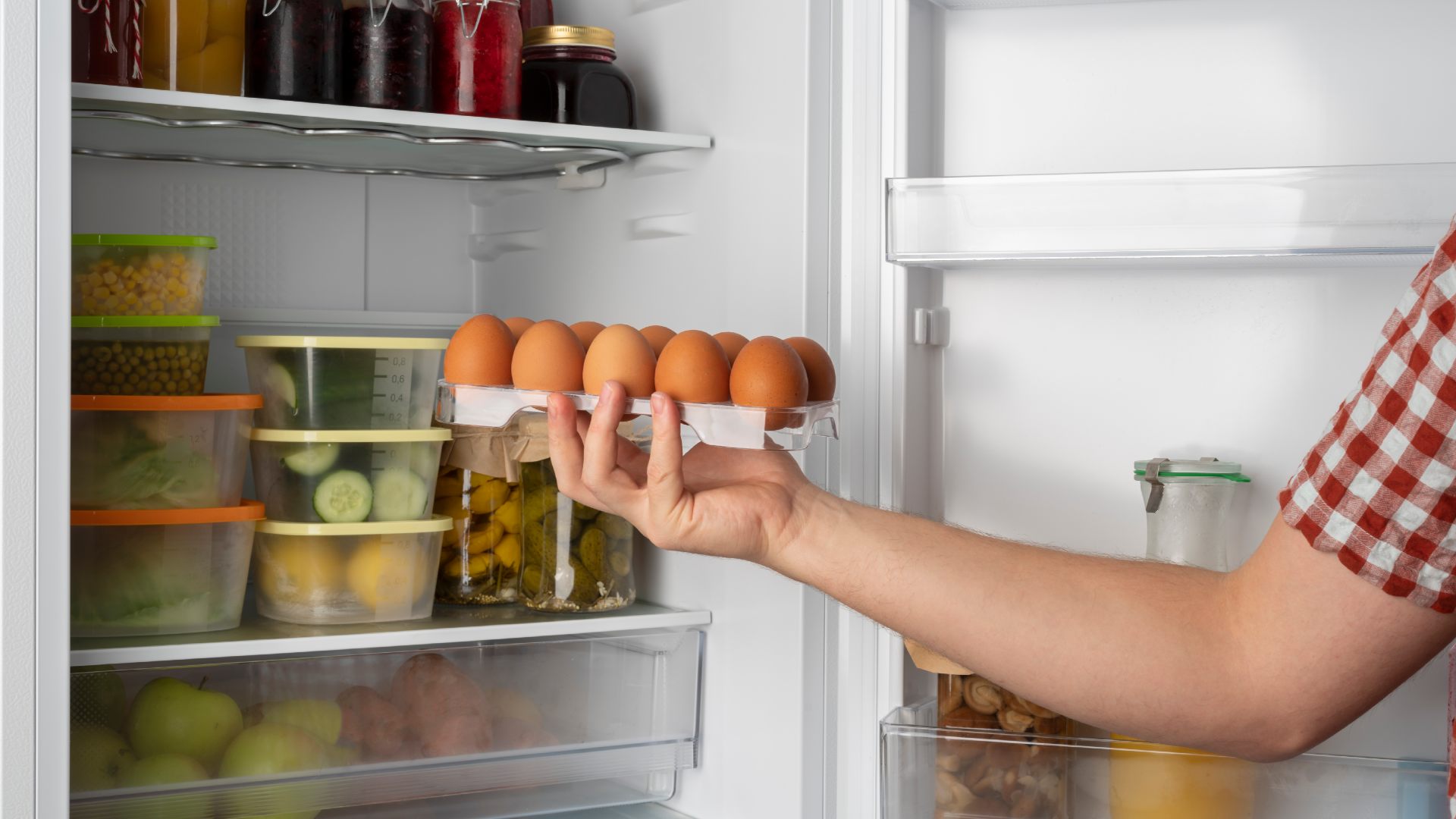
You might think the refrigerator is the safest place for your eggs. However, in France, this ingrained habit can actually be counterproductive. Far from being a minor detail, how you store your eggs influences their safety and freshness.
Why the fridge isn't always your friend
Unlike in the United States, eggs sold in France are not washed before being placed on store shelves. Their natural cuticle, this thin protective film, remains intact and acts as a barrier against bacteria, particularly salmonella. Placing your eggs in the refrigerator and then taking them out to cook creates condensation on the shell. This moisture weakens the cuticle and, paradoxically, increases the risk of contamination.
Experts therefore recommend storing eggs at a stable room temperature, between 13 and 18°C, and respecting the maximum storage time of 28 days after the indicated laying date. An egg stored properly at room temperature remains fresh and safe, without needing to be refrigerated.
The golden rules for optimal preservation
- At room temperature: this is ideal for French eggs. Store them pointed end down, in their original carton, away from light and strong odors such as those of cheese or onions.
- Refrigerate if necessary: only if you bought pre-chilled eggs and the cold chain has been maintained. Always place them in the center of the refrigerator, never in the door, in their original packaging, and avoid taking them out before use to limit condensation.
- A cardboard box on a cool counter is often the best option. This way, you can enjoy your eggs longer, without unnecessary handling or added risks. By adopting this approach, you preserve both their quality and nutritional value.
- Other tips: never wash your eggs, throw away those with cracked shells, and cook them thoroughly for vulnerable people such as children, pregnant women or immunocompromised people.
What the authorities are saying
The EFSA (European Food Safety Authority) reminds consumers that storing eggs beyond three weeks, even refrigerated, can increase the risk of salmonella. In France, ANSES (the French Agency for Food, Environmental and Occupational Health & Safety) therefore recommends storing eggs at room temperature and checking the expiration date. Refrigeration remains useful for washed American eggs, but for untreated European eggs, maintaining a stable temperature is best to preserve their freshness and safety.
What if you didn't need eggs at all?
You don't have to eat eggs. Cooking without eggs or milk is perfectly possible, and most classic recipes can be made 100% plant-based. Here are a few simple tips:
- Whipped chickpea juice replaces beaten egg white.
- Corn starch, potato starch, tapioca or arrowroot, when moistened, take on a gelatinous texture similar to that of egg and act as a binder.
- Flax seeds or chia seeds produce mucilage when in contact with water and can replace eggs in terrines, savory dishes or even muffins.
- Fruit compotes such as apple or vegetable purees (squash, pumpkin, carrot, courgette) replace eggs to add moisture and lightness to sweet pastries or to thicken savory pastries.
- Agar-agar is ideal for terrines, creams, panna cottas or flans.
- Silken tofu or soy yogurt is suitable when the recipe calls for a lot of eggs.
- To restore the taste of hard-boiled eggs, a few pinches of black salt are enough.
So whether it's about keeping your eggs in the best conditions or cooking without them, you maintain control over your diet and can create delicious and safe dishes, with complete freedom.