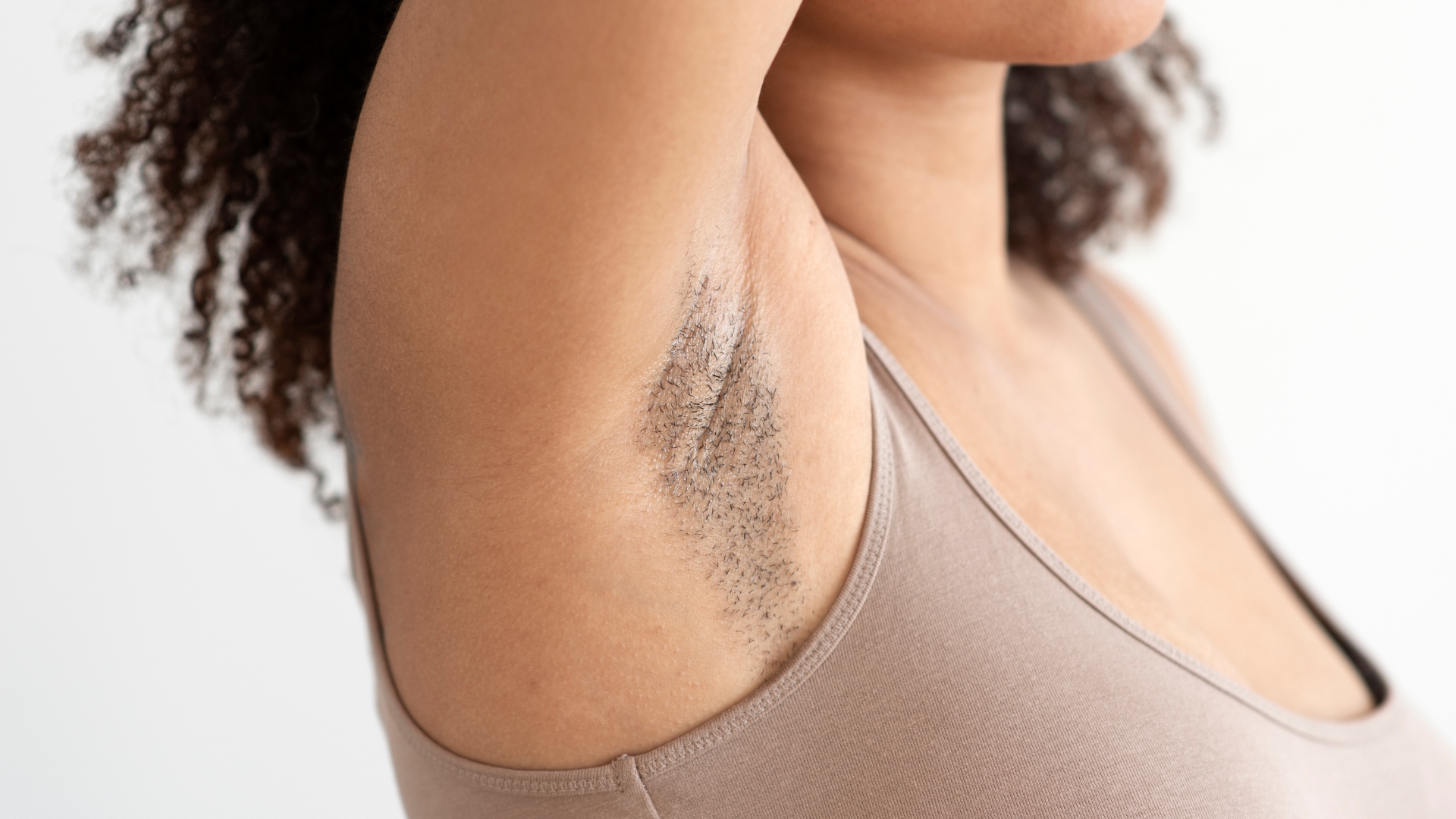
Some people have abundant body hair, while others have almost no hair at all. Contrary to popular belief, this difference isn't solely due to testosterone levels. Hormones, genetics, and family history all play a role in shaping each person's unique body hair.
Hormones, the conductors of body hair
Hair growth is primarily influenced by androgens, a family of hormones that includes testosterone. However, the real key player is DHT (dihydrotestosterone), a more active version of this hormone, produced by an enzyme present in the body.
Its role becomes most noticeable during puberty. Under its influence, the fine downy hair covering the body can develop into thicker, darker, and more resistant hairs in certain areas such as the face, chest, arms, or back. A surprising detail: we all, or almost all, possess the same number of hair follicles. The difference, therefore, lies not in their quantity, but in the type of hair they produce.
Everything hinges on the sensitivity of the follicles.
Why don't two people with similar testosterone levels have the same amount of body hair? The answer lies in the hair follicles. Their sensitivity to hormones varies from person to person, and this characteristic is largely determined by genetics. In some people, the follicles react strongly to androgens, promoting denser hair growth. In others, the response is much more subtle. In other words, it's not just the amount of hormones that matters, but how your body interprets them.
Genes also tell your story
Your family history plays a major role in your body hair. Researchers have identified a gene called EDAR, involved in the formation of hair follicles from the embryonic stage. Certain variants of this gene influence the thickness and structure of body hair. These variants are more common in certain populations, which helps explain why body hair is often more pronounced in people of Mediterranean, Middle Eastern, or South Asian descent, and generally less so in those of East Asian origin. These differences are simply part of the natural diversity of human beings.
More visible body hair in women: is this normal?
Absolutely. In women, increased body hair is most often linked to genetics or family history. It's a natural variation with no health consequences. However, in some cases, a sudden increase in body hair can be associated with a hormonal imbalance, such as polycystic ovary syndrome (PCOS), which leads to a higher production of androgens. If this change is accompanied by other symptoms or appears rapidly, it's best to consult a healthcare professional.
View this post on Instagram
A natural characteristic, quite simply
Being more or less hairy says nothing about your health, your femininity, or your masculinity. This characteristic results from a subtle interplay between genetics, hormones, and the sensitivity of hair follicles.
In reality, body hair is an expression of biological diversity. Each body has its own balance, shaped by heredity and evolution. This perfectly natural difference reminds us that there isn't just one way of being, but a multitude of variations, all equally normal.