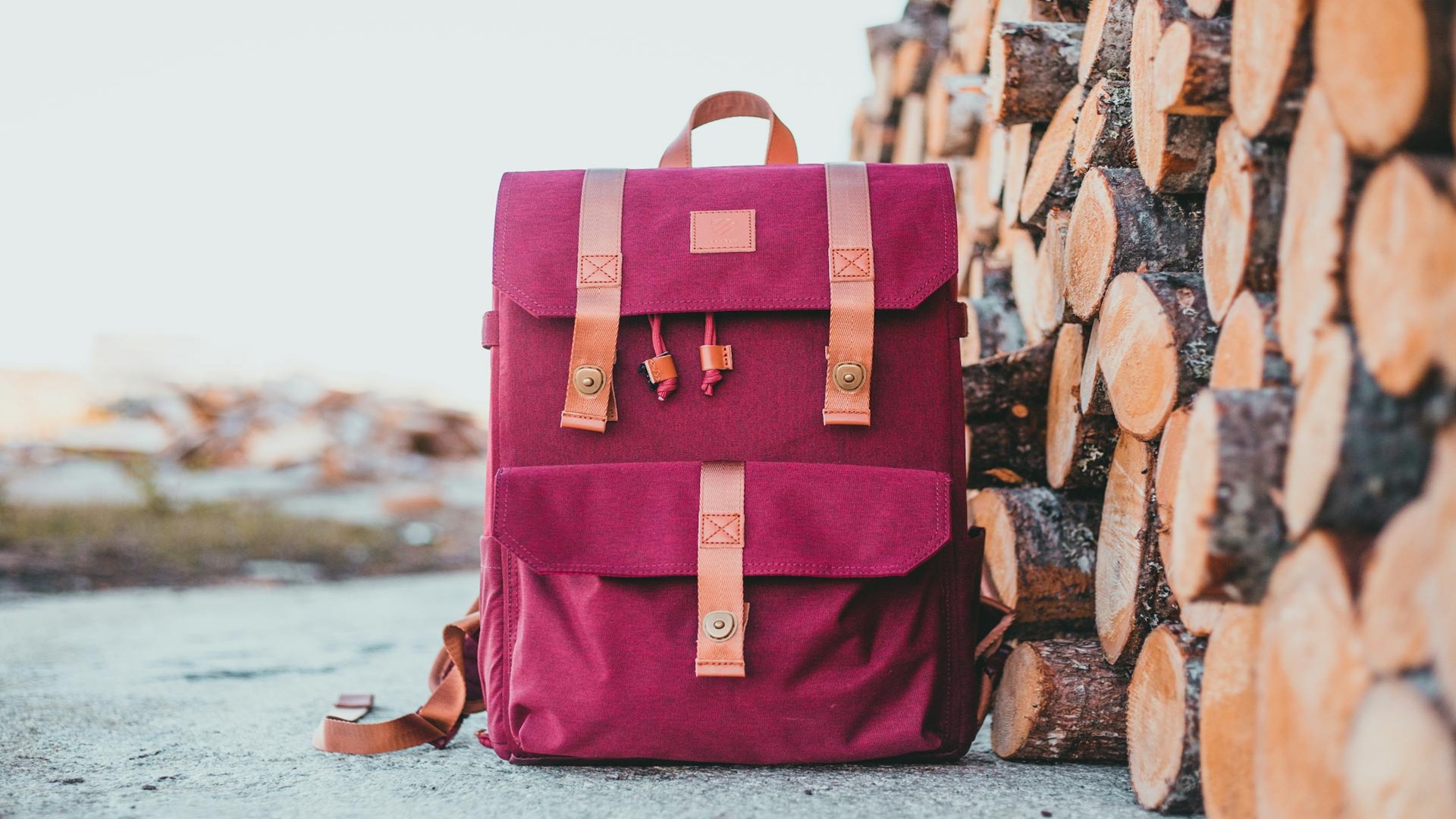
Traveling light has become a priority for many female passengers. Under pressure from the European Union , airlines have just announced an unprecedented harmonization of free baggage sizes.
This decision is a game changer for all those who wish to embark without additional costs.
Choosing a women's cabin travel bag that meets the new standards then becomes essential, regardless of body shape.
Here's everything you need to know to travel smoothly and economically, starting now.
The new common regulatory format: what this means for your cabin backpack
The dimensions imposed by European harmonization
For several years, the proliferation of baggage rules between airlines created real confusion for female travellers.
The European Union has finally prevailed: airlines have announced a joint decision to adopt a single free baggage size of 30x40x15 centimeters .
This measure was supposed to be effective before the end of summer 2025.
This harmonization represents a concrete step forward for female passengers who frequently fly , especially on low-cost routes. In theory, the headache of checking the permitted dimensions for each airline is over. One single format, one clear rule.
However, this regulatory format is considered particularly restrictive by industry professionals. In a Parisian luggage shop , even the smallest available model was still 5 centimeters larger than the required dimensions.
In other words, finding compliant luggage is a challenge, even for luggage transport specialists.
For female travelers, this means increased vigilance when buying a bag. First and foremost, it's essential to check the exact dimensions of the chosen bag. Even a slight discrepancy can lead to unexpected fees at the airport .
Anticipating this constraint also means traveling without unpleasant surprises.
The backpack, the only piece of luggage that meets this format
According to the manager of a store located in the 18th arrondissement of Paris, this free baggage format currently only exists in the form of a backpack.
The dimensions recorded are close to 40x25x18 centimeters , slightly above the official standards, but overall compliant in the spirit of the regulations.
This observation is crucial. Traditional suitcases , even compact ones, cannot achieve this size without sacrificing their rigid structure. The backpack naturally adapts to these dimensional constraints thanks to its flexibility.
It also offers optimized storage capacity for travelers who know how to organize their travel belongings .
For women who travel frequently, often with varying body shapes, the cabin backpack offers a significant ergonomic advantage. It can be worn on both shoulders, freeing up the hands and adapting to all sizes.
It is a practical, inclusive and economically advantageous solution.
- The backpack more easily complies with the strict dimensional constraints imposed by the new regulations.
- It offers better weight distribution on the back, regardless of the traveler's size.
- Its flexible format allows it to be slipped under the front seat if necessary, avoiding any disputes at boarding.
The women's cabin travel backpack is therefore the most relevant choice for traveling with peace of mind, without spending an extra euro on luggage.
A simple, accessible solution that is perfectly aligned with the new requirements of air transport.
Airline baggage fees: why a women's cabin backpack saves you money
Increasingly high cabin baggage fees
Financial considerations are a major concern for female travelers. Low-cost airlines now charge between 6 and 75 euros for cabin baggage , depending on the route and time of year.
A particularly wide range, which sometimes makes budget planning for a trip tricky.
Female passengers report situations where the cost of luggage exceeds the price of the ticket itself. Some mention tickets costing around 100 euros , to which the cost of cabin baggage is added.
The total price of the trip doubles, sometimes more, depending on the destination and the company chosen.
This phenomenon is no longer limited to low-cost airlines .
According to an expert from the European Consumer Organisation (BEUC), this practice of charging for cabin baggage is gradually becoming more widespread among traditional airlines.
A significant trend that puts a strain on the budgets of frequent female travelers.
By comparison, these exorbitant fares are leading some to consider alternative modes of transport for short journeys. High-speed trains (TGV) or national SNCF lines often allow passengers to bring more luggage at no extra cost.
But for long-distance destinations, flying remains essential.
- Book your flight ticket in advance to benefit from the best rates with baggage included.
- Always compare airline fare schedules before choosing your flight.
- Choose a backpack with dimensions that comply with free baggage allowance to avoid any fees.
Faced with this price reality, choosing a cabin travel bag that meets free standards becomes a smart, economical decision.
Saving a few tens of euros on each flight represents hundreds of euros per year for a regular traveler.
New travel habits in the face of rising costs
The increase in baggage fees has profoundly changed behavior at the airport . Many people have revised the way they pack their travel luggage , reducing their load or foregoing paid cabin bags .
This trend towards minimalist travel is not solely driven by price . It also reflects a new philosophy of mobility: traveling with only the essentials, gaining agility and fully enjoying your stay without being burdened by bulky luggage.
The women's cabin backpack perfectly embodies this evolution.
For women who proudly embrace all body shapes, choosing an ergonomic and well-fitting bag truly changes the travel experience.
A good backpack, designed to fit different body shapes, transforms the journey into a pleasant experience rather than an obstacle course.
The optimized capacity of these bags allows you to carry the essentials for a long weekend or a business trip.
Neatly rolled clothes, essential accessories, travel documents: everything fits into a compact format and is accepted free of charge on board . Organization becomes an art, and travel, complete freedom.
Cabin suitcases and backpacks: different rules depending on the airline
Cabin suitcases are outside the scope of European harmonization.
While the harmonization of free baggage represents a real step forward, it has one important limitation: cabin-sized suitcases are not covered by this new common rule.
Each company maintains its own size standards and rates for this type of luggage.
This situation creates persistent uncertainty for female travelers who prefer suitcases to backpacks. A suitcase accepted free of charge by one airline may be charged by another, sometimes for several tens of euros .
The lack of harmonization on this point fuels confusion and unpleasant surprises at the airport .
This disparity between the rules applied to backpacks and those governing cabin baggage reinforces the former's competitive advantage. With a soon-to-be-standardized format for free baggage, backpacks offer a predictability that suitcases cannot guarantee.
For female travelers who frequently fly with different airlines , this is a compelling argument.
- Cabin baggage remains subject to the rules specific to each airline, with no harmonization planned.
- Fees vary considerably from company to company, making any comparison difficult.
- The free-format backpack eliminates this financial risk for female passengers.
Choosing the right type of travel luggage for women depends as much on travel habits as on the airlines used. But in a context of fare uncertainty, the security offered by a certified backpack is an advantage that's hard to ignore.
The demands of the European parliamentarians to go further
Members of the European Parliament acknowledge that the harmonization measure is a step in the right direction.
But they consider it insufficient. Their main demand: to allow each traveler to bring two small bags free of charge, the second not exceeding 7 kilos .
If successful, this proposal would radically change the relationship between female passengers and cabin baggage .
Two free bags per flight represent unprecedented freedom, especially for those who travel with specific equipment or particular needs related to their daily lives.
For female travellers who like to travel well-equipped without worrying about transport costs , this development would be a real revolution.
It would allow you to carry a main cabin backpack and an additional piece of luggage, covering all the needs of a short or medium-term stay.
Pending this regulatory change, the women's cabin travel bag remains the best solution to current constraints.
Well chosen, the right size, ergonomic and designed to fit all female travelers, it embodies a sustainable and intelligent solution to airline pricing policies.