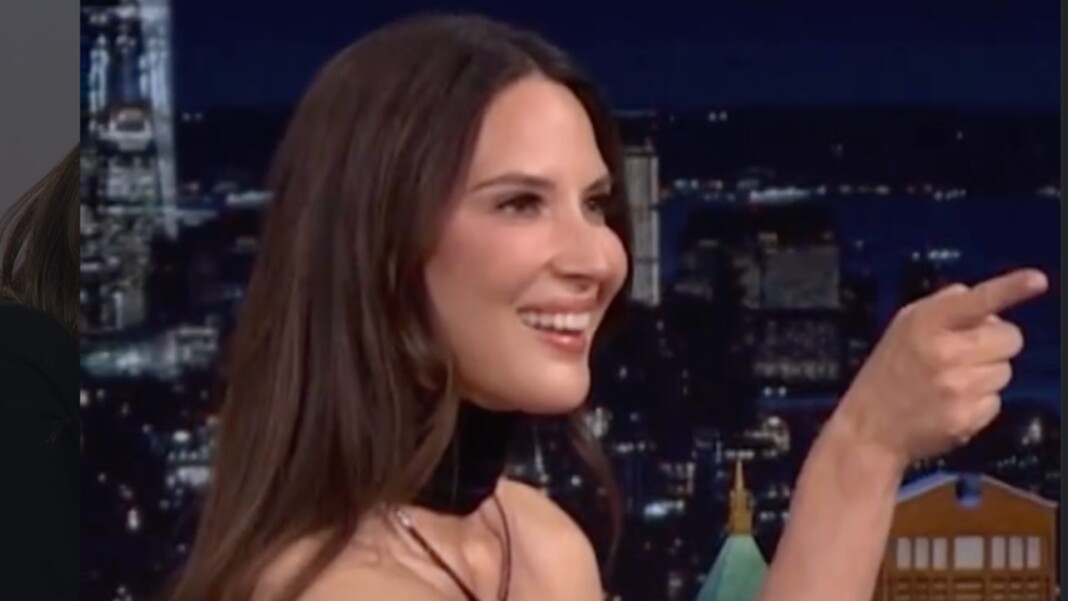
In a recent television interview, American actress and model Olivia Munn shared an anecdote from a film set where an actor reportedly refused to film a scene in which his character was rescued by a woman. This account has reignited discussions about the representation of female roles on screen.
An incident mentioned during a television interview
Olivia Munn recounted this incident during her appearance on "The Drew Barrymore Show." The actress explained that the scene involved an action sequence in which her character was supposed to intervene to prevent another character from being attacked. According to her account, the actor in question stopped filming after realizing that his character was meant to be saved by a female character. She described a tense moment on set, mentioning a disagreement about how the scene should be interpreted.
An action scene called into question
In the interview, Olivia Munn explained that the scene took place in a fictional context involving a confrontation. Her character, presented as a trained professional, was supposed to intervene to neutralize a threat against her on-screen partner. She explained on "The Drew Barrymore Show" that the actor had refused to continue the scene in that configuration, which led to a temporary halt in filming. Olivia Munn also clarified that she proposed a revised approach to the staging to allow work to resume without altering the main plot.


An anecdote that reignites the debate on the representation of women on screen
Olivia Munn's testimony comes at a time when the place of female characters in audiovisual productions is the subject of regular analysis. Discussions surrounding on-screen representation particularly concern the diversity of roles assigned to women, whether they are main or secondary characters.
In this context, the story shared on the set of "The Drew Barrymore Show" also raises questions about power dynamics and perceptions still present in the industry: if the facts are confirmed, such a reaction to the idea that a male character is saved by a woman can be seen as revealing persistent sexist reflexes, where certain representations are still implicitly judged less acceptable than others.
View this post on Instagram
Ultimately, debates about the representation of female characters concern both screenwriting and public perception. Public testimonies contribute to a broader reflection on the diversity of roles and how audiovisual narratives evolve over time.