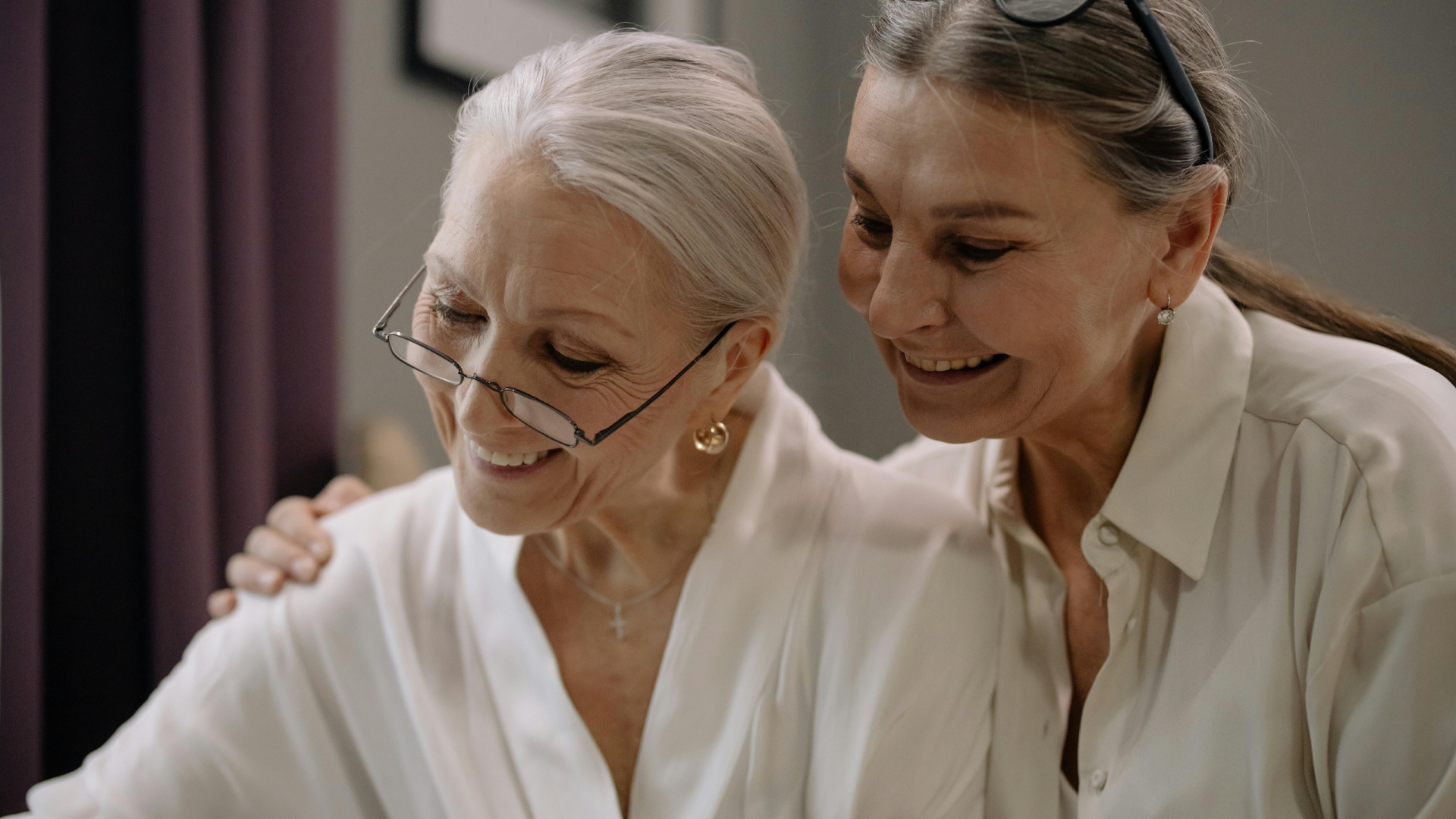
More and more women are now choosing to share their retirement by living in a shared house. It's a way to combine independence, a social life, and a more relaxed daily routine. This lifestyle, still relatively uncommon but rapidly growing, is redefining how we live in our later years.
Living together to break with isolation
The isolation of older people is a well-documented issue, particularly among women, who live longer and are more often left alone after widowhood. In this context, shared housing appears as a concrete and positive solution.
Sociological research shows that living in a community reduces feelings of loneliness and increases daily interaction. Studies on cohousing suggest that this type of housing naturally fosters mutual support, spontaneous exchanges, and a sense of security, while still allowing each resident their own personal space. The idea is simple and reassuring: having your own home without being isolated.
An alternative between autonomy and collective structure
Senior co-living offers a balance between two traditional models: staying alone at home or moving into a specialized facility. It provides a third, more flexible and often more attractive option.
In practical terms, this type of housing allows residents to maintain private space while sharing common living areas. Meals, activities, and certain tasks can be shared, simplifying daily life and fostering connections. Some packages also include shared services, making life easier without making it rigid. This model is particularly appealing because it allows residents to remain active participants in their daily lives, within a vibrant and stimulating environment.
The Babayagas, a pioneering and inspiring project
In France, one of the best-known examples of this movement is the Maison des Babayagas in Montreuil. Conceived by Thérèse Clerc, this residence for retired women is based on a powerful idea: growing old together without giving up one's autonomy.
The women living there share much more than just a roof over their heads. They are organized around three pillars: self-management, solidarity, and civic engagement. Each woman participates in the life of the community and in collective decision-making. This project goes beyond simple co-living. It embodies an active and joyful way of living in retirement, where each woman maintains her place while contributing to a shared project.
View this post on Instagram
Why this model particularly appeals to women
Several factors explain the growing appeal of these forms of collective living. Women live longer on average, often have more modest retirement incomes, and are more exposed to loneliness.
Historically, similar models already existed, such as beguinages, where women lived together in a spirit of mutual support and community. Today's senior co-living arrangements are a modern version, adapted to contemporary challenges. Above all, they offer something invaluable: the opportunity to choose one's living environment and the people with whom to share it.
Tangible benefits in everyday life
Studies on shared housing highlight several positive effects. Economically, pooling certain expenses reduces costs. Practically, it facilitates access to certain services and eases daily constraints.
From a health perspective, public health research highlights an important point: social isolation can negatively impact overall well-being. Conversely, maintaining regular interactions and an active social environment contributes to a better quality of life and improved mental health. While not a medical solution, shared living for seniors therefore acts as a factor in overall well-being.
A trend that is expected to grow
With an aging population, these models are attracting increasing attention from public authorities and housing stakeholders. Inclusive housing, which includes these shared living arrangements, is now being considered a solution for the future. It allows us to rethink aging not as a withdrawal, but as a continuation of an active, social, and chosen life.
Living together, but in one's own way
One of the key aspects of these projects is freedom. The residents choose their housemates, define their house rules, and organize their daily lives as they wish. Some initiatives, like the Babayagas project, go even further with collective management of the space. This autonomy reinforces the feeling of being fully involved in shaping one's environment.
Ultimately, through these experiences, retirement is transformed. It is no longer simply a time for rest, but can become a time for connection, sharing, and common projects. Senior co-housing, driven by pioneering initiatives, thus offers a different vision: a vibrant, chosen, and profoundly human old age, where the word "together" takes on its full meaning.