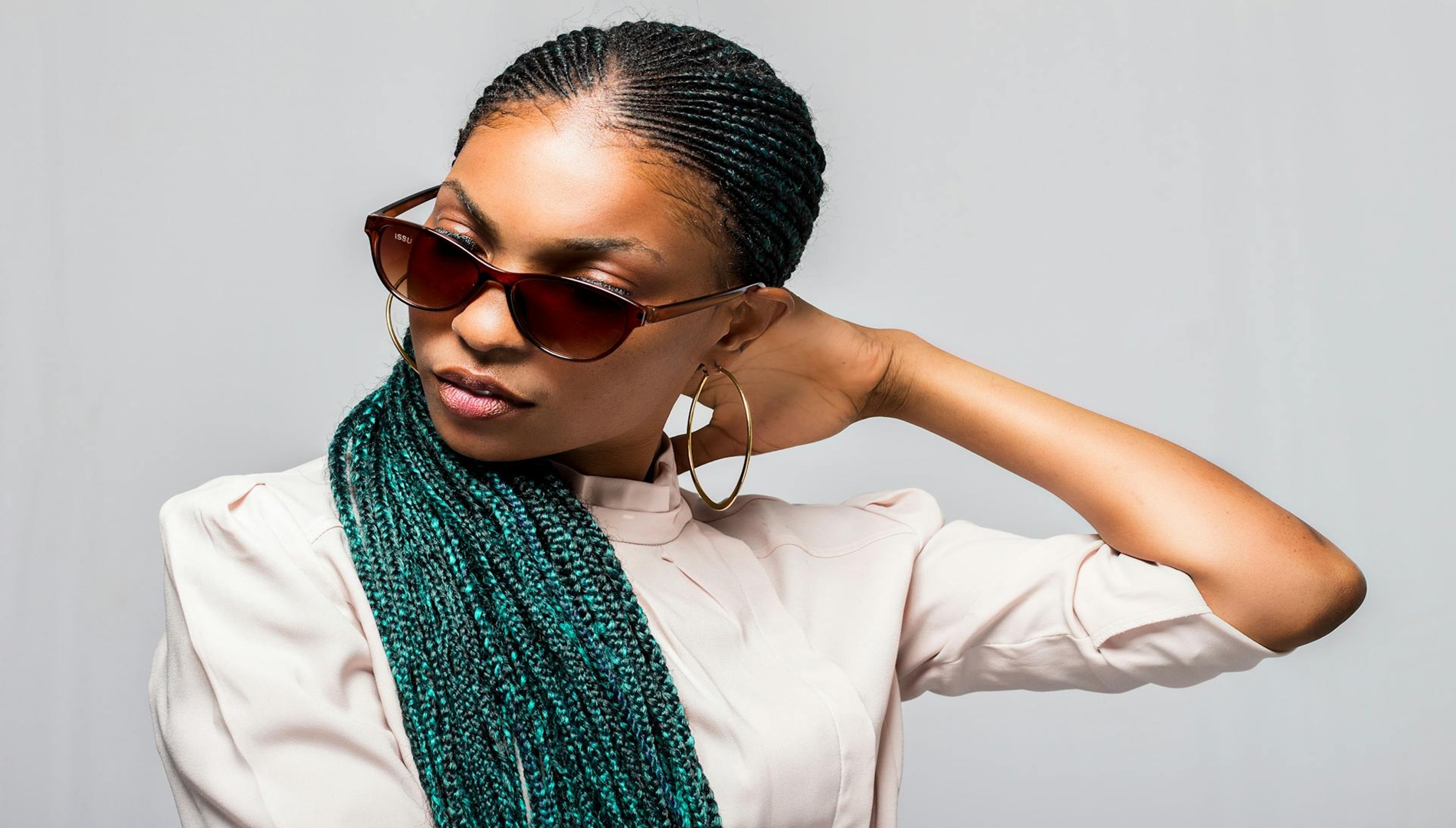
African women's hairstyles embody one of humanity's richest ancestral heritages . Their history dates back to approximately 22,000 BC, making them the oldest known form of hairstyle in the world.
Far more than mere ornaments, these African braids traverse civilizations, continents and eras with remarkable vitality.
They protect natural hair , transmit social codes and affirm a deep cultural identity .
In this publication, we look for the most iconic styles — from box braids to dreadlocks , cornrows and Senegalese twists — while deciphering their meaning, evolution and the trends that make these hairstyles shine on the international stage.
African braids: an ancestral art with millennia-old origins
The earliest historical traces of African braids
African braids are the oldest documented form of hairstyle in human history.
Two archaeological statuettes attest to this: The Venus of Willendorf , dated to around 30,000 BC, and The Lady of Brassempouy , about 23,000 years old, whose phenotypes are associated with African women.
These remains bear witness to a hair care practice that was already sophisticated at the dawn of humanity.
In major African civilizations, notably ancient Egypt and the Nok civilization, men and women sported various forms of braids . Some even added gold threads to accessorize their hairstyles, demonstrating a keen sense of elegance and refinement.
This ancestral art transcends geographical and temporal boundaries.
The cultural and social significance of braids in ancient Africa
In ancient African societies, hairstyles were far from insignificant. Braids allowed one to identify at a glance a person's social rank, caste, marital status, or ethnic affiliation.
This strong symbolism gave each hairstyle an irreplaceable identity and social dimension.
This living cultural heritage was based on techniques passed down from generation to generation, from mothers to daughters, from elders to the youngest. The resilience of this hair care knowledge in the face of historical upheavals testifies to its deep roots in African traditions.
African braids: a tool of resistance and identity
Braids as a survival tool during the slave trade
The history of African braids takes on a shocking dimension during the slave trade. Black slaves used their hairstyles to conceal escape routes directly within their braids .
These protective hairstyles thus became an instrument of resistance and freedom , a secret code woven into the hair.
This historical reality underlines how African braiding goes far beyond the aesthetic realm.
She embodies a vital force, an ingenuity born of adversity. Recognizing this legacy also means honoring the memory of those who risked their lives to regain their freedom.
Colonization and the pressure of Western beauty standards
The colonial period weakened African women's relationship with their natural hair . Under the influence of Eurocentric beauty standards, hair straightening, weaves , and wigs gradually replaced traditional braids .
This aesthetic pressure has led to a painful break with authentic African hair.
The natural hair movement was born precisely to counter this dynamic.
He advocates a return to natural hair as an act of resistance against Eurocentric norms, encouraging every woman to fully embrace her hair texture without resorting to chemical straightening products.
The popularization of African braids worldwide
The resurgence of African braids since the 2000s
From the 2000s onwards, African hairstyles have regained unprecedented international visibility.
Leading African-American artists played a decisive role in this revival: Alicia Keys, Brandy, Beyoncé with Destiny's Child, but also Ludacris and Allen Iverson proudly displayed their braids on the world's most high-profile stages.
This return to favor has profoundly influenced global hairstyle fashion .
Millions of women, from all backgrounds, have rediscovered the richness of African braids , from box braids to cornrows , confirming their lasting trend and stylistic versatility .
African braids and the debate on cultural appropriation
The increasing adoption of African braids by figures outside of African culture raises legitimate questions about cultural appropriation.
These hairstyles carry a cultural identity and a collective memory that some consider impossible to separate from their original context.
UNESCO officially recognizes natural Afro hairstyles as essential elements of living cultural heritage , carrying stories of transmission, resilience and identity .
This institutional recognition gives additional legitimacy to the ongoing debates and invites an approach that respects these traditions .
Box braids: a symbol of strength and freedom
What are box braids?
Box braids are individual braids made from three strands of hair, distributed all over the head.
They can be applied directly to natural hair or with hair extensions . Their versatility is remarkable: short or long, colored or natural, they adapt to all face shapes and hair lengths.
Beyond their aesthetic appeal, box braids embody a symbol of strength and freedom deeply rooted in African-American culture.
They provide an effective protective hairstyle that limits excessive hair manipulation while offering a neat and elegant result.
How to wear and style box braids?
Creativity is at the heart of wearing box braids . They can be worn loose for a bold bohemian look, or styled in an elaborate bun, discreet buns or a trendy half bun.
This versatility makes it a particularly popular hairstyle for all occasions.
Knotless braids are a variation without the tight knots at the base. Less stressful on the scalp and quicker to install, they offer increased comfort while maintaining the look of classic braids. A wise choice for preserving hair health .
Cornrows: braids that blend tradition and modernity
The cornrows technique
Cornrows , also known as flat braids, are braids that are attached directly to the scalp. They can be created in simple, regular parallel rows, or in highly sophisticated geometric and organic configurations.
They adapt to all hair lengths and types.
This ancestral hair technique is an integral part of African heritage . Each motif tells a story, expresses belonging, or celebrates a cultural identity .
In cornrows we find all the symbolic richness of African traditions .
Cornrows revisited: colors, rings, and hair tattoos
Contemporary versions of cornrows incorporate pops of bright color, metallic hair rings, and even temporary hair tattoos.
These stylistic innovations perfectly illustrate the ability of this traditional hairstyle to reinvent itself without losing its soul.
This growing originality confirms the central place of cornrows in current hairstyle fashion . From the catwalk to fashion editorials, they appear as a strong marker of trend and authenticity .
Fulani braids and Bohemian Fulani: Fulani heritage and current trend
The origin and characteristics of Fulani braids
Fulani braids have their roots in the culture of the Fulani ethnic group. Their stylistic signature is instantly recognizable: a central braid on the skull, braids framing the hairline, and one or more braids directed towards the face near the temples.
Pearls and various accessories traditionally adorn these hairstyles, giving them a unique elegance .
These braids represent much more than a simple hairstyle: they embody Fulani cultural identity and are proudly passed on. Today, they appeal to Black women of all ethnicities, far beyond their community of origin.
The Bohemian Fulani: a voluminous and contemporary version
Bohemian Fulani braids take the classic Fulani braids and add volume and shine.
This revamped version brings immediate visual dynamism and establishes itself as a strong trend in the world of contemporary Afro hairstyle fashion .
The blend of Fulani tradition and modern creativity makes Bohemian Fulani a hairstyle that is as spectacular as it is versatile, capable of enhancing all silhouettes for all occasions.
Senegalese twists and passion twists: between sweetness and boldness
Senegalese twists: origins and characteristics
Senegalese twists , often called "vanillas ," take their name from Senegal, the country to which they are attributed. Made from two intertwined strands of hair, they offer a much-loved bohemian look.
Their soft texture and flexible hold make them a highly sought-after protective hairstyle .
Located halfway between traditional African braids and dreadlocks , Senegalese twists structure the hair fiber while preventing tangles. An excellent choice for combining healthy hair and natural elegance .
Passion twists: expressing your personality creatively
Passion twists are a bold and playful variation on classic twists . Their slightly curly, bohemian texture adds an immediate creative dimension.
They allow each woman to express a unique personality while benefiting from the advantages of effective hair protection .
Their growing popularity reflects a strong aspiration to reconcile cultural identity and stylistic originality , two values at the heart of contemporary Afro beauty .
Bantu knots: a protective hairstyle with Bantu roots
History and technique of Bantu knots
Bantu knots are historically associated with the Bantu peoples of Cameroon and Nigeria. Their technique involves twisting the hair around itself to form small, compact, and regular knots.
They are suitable for all hair lengths, with or without added hair extensions.
This traditional hairstyle perfectly illustrates the versatility of African hair techniques. Simple to create, it effectively protects natural hair while asserting a strong cultural identity .
Bantu knots: a two-in-one hairstyle
One of the major advantages of Bantu knots lies in their dual function. Worn as is, they constitute a graphic and elegant protective hairstyle .
Once released, they reveal magnificent, voluminous, perfectly defined curls.
This exceptional versatility makes it one of the most ingenious hairstyles in the African hair arsenal. A single application technique, two distinct results: that's the art of Bantu knots.
Dreadlocks: Identity, Spirituality and African Heritage
The African origins of dreadlocks
Dreadlocks , or locs , are formed when strands of Afro hair naturally tangle and twist. The Maasai, Akan, Bono, and Okomfo are among the first African peoples to have worn them.
These locs embody ethnic identity, spirituality, pride, and glory.
Their authenticity is total: they require no extensions, no artifice. Dreadlocks grow with natural hair , testifying to a deep connection with one's own hair nature and ancestral heritage .
Dreadlocks today: a symbol of rebellion and wisdom
Today, locs are seen as a symbol of rebellion and wisdom . They appear in fashion shows, editorials, and international campaigns, confirming their lasting influence in global creative industries.
Wearing dreadlocks is about claiming total freedom in one's hair and asserting a strong sense of identity. This contemporary trend proves that these ancestral hairstyles have never been more relevant.
Crochet braids: practicality and versatility at the service of style
What are crochet braids?
Crochet braids are pre-braided hair extensions attached to natural hair using a crochet hook.
Quick to install and particularly practical, they represent an ideal solution for anyone who wants to adopt a protective hairstyle without spending long hours at the hairdresser's.
Suitable for all hair lengths, this technique minimizes excessive handling and preserves hair health . An excellent compromise between style and everyday hair protection .
The different variations of crochet braids
The world of crochet braids offers an impressive diversity of styles.
From versions close to traditional braids to more creative variations inspired by Senegalese twists or passion twists , every woman finds her signature hairstyle.
This remarkable versatility allows you to quickly achieve a neat and trendy hairstyle without compromising hair health . Crochet braids thus combine creativity , practicality, and elegance .
African hairstyles for special occasions: splendor and tradition
African bridal hairstyles: fertility and prosperity
For major ceremonies, African hairstyles reach peaks of elegance and sophistication .
Bridal hairstyles combine elaborate chignons , braids adorned with jewels, and traditional hair accessories such as wooden combs or embroidered scarves. Every detail is designed to enhance the bride's beauty.
These bridal hairstyles traditionally symbolize fertility and prosperity, thus placing marriage within a cultural and spiritual continuity.
They beautifully illustrate the richness of African cultural heritage and its influence during life's most precious moments.
The Kardoun and ceremonial hairstyles of North Africa
In Algeria, the Kardoun is a traditional ribbon used to straighten hair naturally while protecting it.
Wrapped around a sleek ponytail, it keeps hair smooth and hydrated while minimizing breakage. This technique combines care and elegance with remarkable effectiveness.
In the context of North African ceremonial hairstyles, the Kardoun is part of a tradition where ancestral heritage and aesthetic refinement come together to magnify special occasions.
A beautiful illustration of the diversity of African hair traditions .
Maintaining and preserving your African braids: essential tips and products
Essential products for taking care of your braids
Maintaining African braids relies on three fundamental products. A styling and moisturizing cream deeply nourishes the hair while maintaining the flexibility of the braids .
A fixing wax ensures that the hairstyle stays in place and remains smooth over time.
The fortifying oil completes this essential trio by limiting breakage and strengthening the weakened hair fiber.
A good hydration routine significantly prolongs the life of the hairstyle while preserving the hair health of the natural hair under the braids .
Best practices for protecting your natural hair under braids
African braids are primarily protective hairstyles .
They protect natural hair from external aggressions, protect the scalp from diseases, lice and itching, and reduce excessive handling that can weaken the hair .
To maximize these benefits, we recommend not leaving the braids in place for too long, regularly cleaning the scalp and gently detangling when removing them.
Taking care of your African braids is to honor both your ancestral heritage and your own natural beauty .