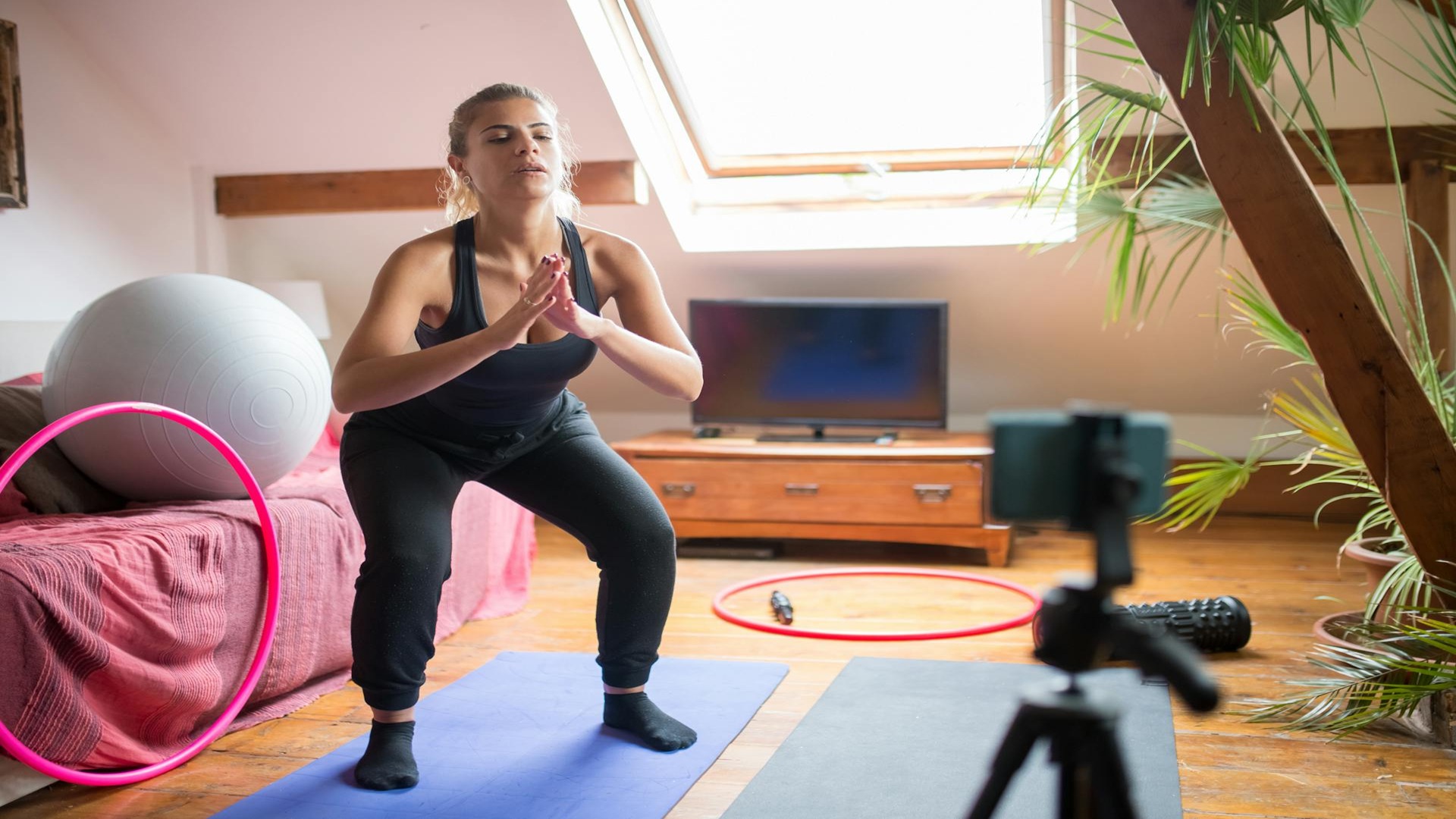
Working out at home without equipment is possible, effective, and accessible to everyone. Whether you're a beginner or looking to intensify your training, a well-structured home strength training program for women can transform your body and your daily life.
No need for a gym or expensive equipment: body weight is enough to gain strength , tone and energy.
This comprehensive guide accompanies you step by step, from fundamental exercises to concrete weekly programs, whatever your level.
Why is weight training beneficial for women?
Concrete physical benefits
Women's weight training offers much more than just toning . It promotes sustainable weight loss by increasing the basal metabolic rate: the more muscle you develop, the more calories your body burns, even at rest.
The result: a more balanced body composition in the long term.
Bones also benefit from this effort. Strength training improves bone density and prevents osteoporosis , a particularly important issue for women.
The joints are stabilized thanks to strengthened muscles , which reduces the risk of injury. Posture improves, back and neck pain decrease, and the body gains functional mobility in daily life.
A positive impact on mental well-being
Physical exertion releases endorphins, the "feel-good" hormones that improve mood and reduce stress . Strength training also helps lower cortisol levels, which are often high during periods of stress.
Sleep deepens, recovery is more effective, and daily energy levels increase significantly.
As the sessions progress, a real sense of self-confidence is built. Seeing one's body evolve, mastering increasingly complex exercises , feeling one's strength grow: these concrete victories foster a positive body image and lasting well-being .
Misconceptions about women's bodybuilding that need to be debunked
No, weight training does not make women masculine.
This is probably the most persistent myth. In reality, women naturally produce very little testosterone compared to men, which biologically limits any dramatic muscle gain .
Developing an impressive physique requires ultra-intensive training , a very controlled high-calorie diet, and often specific supplementation.
Lifting weights or doing resistance exercises primarily leads to a firmer and more defined physique.
Femininity is not called into question: on the contrary, bodybuilding strengthens confidence and ease in one's body, regardless of one's morphology.
No, cardio alone is not enough
Cardio burns calories during exercise, that's undeniable. But weight training works differently: it develops muscle , which constantly consumes energy, even at rest.
According to scientific data, an extra kilogram of muscle burns approximately 13 calories per day at rest, compared to only 4.5 for a kilogram of fat.
In the long term, combining weight training and cardio offers results far superior to exclusive cardio training.
The diversity of exercises and muscle strengthening remain the most powerful levers for sustainable weight loss and overall health improvement.
How to prepare your space and get started without equipment?
Set up a dedicated training area
You don't need a large space: a corner of the living room, a terrace, or a cleared bedroom will suffice. The essential thing is to have a free space where you can move around, lie down, and do squats or push-ups without restriction.
Installing a mirror allows you to check your postural placement and adjust your technique in real time.
Everyday objects can replace traditional equipment. Water bottles can serve as dumbbells for beginners, and a sturdy chair is sufficient for dips or isometric squats.
A floor mat protects the knees and back during floor exercises. Wearing comfortable clothing that allows for movement completes this ideal environment.
The fundamental principles before starting
Technique always takes precedence over intensity . Poorly executed movements increase the risk of injury and reduce the effectiveness of the workout. Breathing plays a key role: inhale on the way down, exhale on the way up.
This rhythm optimizes performance and endurance over time.
Each session begins with a 5-10 minute warm-up : jumping jacks , joint rotations, brisk walking in place. This time prepares the joints and muscles.
The session ends with 5 minutes of stretching to prevent muscle soreness and promote recovery . Gradual progression remains the key to effective and injury-free training.
What frequency and volume of training is appropriate depending on one's goals?
For beginners
When starting out, the challenge is to establish a regular routine without overloading the body. Two to three sessions per week represent an ideal rhythm.
Each session lasts 30 to 40 minutes , with 10 to 15 repetitions per exercise and 30 to 60 seconds of rest between sets.
Rest days are not optional: they allow muscles to rebuild and progress.
Including at least one or two days of complete recovery per week protects the joints and prevents overtraining, a common pitfall among motivated beginners.
| Level | Sessions/week | Rehearsals | Rest between sets |
| Debutante | 2 to 3 | 10 to 15 | 30 to 60 seconds |
| Weight loss | 3 to 5 | 12 to 20 | 15 to 45 seconds |
| Toning | 4 to 5 | 8 to 12 | 60 to 90 seconds |
For toning or weight loss
To refine your figure and promote muscle definition , three to five weekly sessions prove more effective.
Repetitions are increased to 12-20, rest periods are shortened (15 to 45 seconds), and circuit training becomes a preferred format: linking exercises without prolonged breaks keeps the heart rate high and amplifies energy expenditure.
Adding cardio sessions, such as HIIT, effectively complements this system. The modulated intensity of the circuits allows all body types to progress at their own pace, adapting the loads and exercise variations to their needs.
Essential lower body exercises requiring no equipment
Squats and variations
The classic squat remains the foundation of leg and glute training . The sumo squat, with feet very wide apart and toes pointed outwards, targets the quadriceps and adductors more intensely.
The squat jump introduces a plyometric dimension that boosts cardio and explosiveness.
For all these variations, keep your back straight , lower your buttocks to knee level, and push through your heels to return to the starting position. This positioning protects the joints and maximizes leg muscle work.
| Squat variation | Targeted muscles | Difficulty |
| Classic squat | Quadriceps, glutes | Debutante |
| Sumo squat | Quadriceps, adductors | Intermediate |
| Jump squat | Legs, cardio | Advanced |
Lunges and glute exercises
Forward and reverse lunges simultaneously work the glutes , hamstrings, and quadriceps. A longer stride engages the glutes more, while a shorter stride emphasizes the thighs. The front knee remains directly above the foot, without moving out to the sides.
The glute bridge and the hip thrust on the floor are remarkably effective: lying on your back, push with your heels to lift your hips, squeezing your glutes tightly at the top of the movement.
The unilateral version, performed on one leg, intensifies the workout even further. These exercises are suitable for all body types and require no equipment.
Essential upper body exercises without equipment
Exercises for the chest, shoulders and triceps
Classic push-ups remain the best way to work your chest , shoulders, and triceps . For beginners, performing push-ups on your knees or with your hands elevated on a bench reduces the intensity without compromising the technique.
Close-grip push-ups , with elbows close to the body, target the triceps very effectively.
Dive-Bomber push-ups (or Hindu push-ups) add a spectacular dimension: plunging towards the ground while arching the back engages the pectorals , back, shoulders and abdominals .
Chair dips complement this upper body workout, in an easy version (knees bent) or an advanced version (legs straight).
| Exercise | Targeted muscles | Beginner adaptation |
| Classic pumps | Chest, shoulders, triceps | On your knees or with your hands raised |
| Tight grip pumps | Triceps | On my knees |
| Chair dips | Triceps, shoulders | Knees bent |
Exercises for the back and biceps
Without a pull-up bar or equipment, the back can be effectively worked on the floor. Lateral arm raises while lying prone , by bringing the shoulder blades together, strengthen the upper back and improve posture .
Simultaneously raising the opposite arm and leg from this same position engages the lumbar and stabilizing muscles.
Two water bottles can be used to mimic incline rows or light bicep curls . These simple alternatives are very accessible and provide an excellent starting point before investing in real dumbbells .
Abdominal and core strengthening exercises to incorporate
Core training, a cornerstone of muscle strengthening
The front plank , held for 30 to 60 seconds, is the gold standard core strengthening exercise. It targets the trunk, shoulders, and deep abdominal muscles , while also improving postural balance .
The side plank isolates the obliques more, muscles that are often neglected.
The military plank alternates between a straight-arm position and a position on the elbows, without letting the knees touch the ground. The plank with an elevated arm , by alternately raising each arm, strengthens the abdominal muscles and improves coordination.
These exercises form the basis of any women's strength training program.
Dynamic abdominal exercises
Classic crunches target the rectus abdominis. The crunch with rotation works the obliques more, as do Russian twists (3 sets of 15 repetitions per side).
Mountain climbers combine core strengthening and cardio in a single, particularly effective dynamic movement.
The bird-dog pose , performed from a quadruped position, strengthens the lower back and core stabilizing muscles. Pilates exercises like the Roll Up or Double Leg Stretch complement this deep work by targeting the innermost abdominal muscles .
| Exercise | Kind | Targeted muscles |
| Front panel | Static | Trunk, abdominals |
| Side panel | Static | Obliques |
| Mountain climbers | Dynamic | Abdominals, legs |
| Bird-dog | Dynamic | Back, stabilizers |
A complete weekly program for beginners
Structure of the week over 3 sessions
We recommend scheduling sessions over three non-consecutive days, for example, Monday, Wednesday, and Friday. This structure allows for sufficient recovery time between each session and prevents excessive muscle fatigue.
Day 1 covers the whole body , day 2 targets the lower body , and day 3 focuses on the upper body and core strengthening .
Intermediate days can accommodate brisk walking , stretching , or a gentle yoga session to facilitate active recovery without excessively stressing the muscles.
Details of exercises per session
| Session | Exercise | Series × Repetitions | Rest |
| Day 1 – Full body | Goblet squats | 3 × 12-15 | 60-90 s |
| Day 1 – Full body | Glute bridge | 3 × 15 | 45-60 s |
| Day 1 – Full body | Military Developed Seated | 3 × 10⁻¹² | 60-90 s |
| Day 2 – Lower body | Bench hip thrust | 4 × 12 | 60-75 s |
| Day 2 – Lower body | Walking lunges | 3 × 10/leg | 60 s |
| Day 3 – Upper body | Push-ups on your knees | 3 × 10⁻¹² | 60 s |
| Day 3 – Upper body | Lateral elevations | 3 × 12-15 | 45 seconds |
| Day 3 – Upper body | Lateral sheathing | 3 × 30-45 s | 30 seconds |
An example of a program without materials, organized into 3 sessions
Session 1: Chest, back and core training
This equipment-free workout effectively targets the upper body and core. Here are the recommended exercises:
- Classic push-ups : 3 sets of 10 to 12 repetitions
- Dive-Bomber Push-ups : 3 sets of 8 repetitions
- Lateral arm raises while lying prone : 3 sets of 15 repetitions
- Opposite arm and leg raises: 3 sets of 12 repetitions
- Plank with raised support : 3 sets of 30 to 45 seconds
Allow 45 to 60 seconds of rest between each set. Technique is more important than speed of execution.
Session 2: Legs and glutes
All women, regardless of their body type, can greatly benefit from this targeted workout. The lower body workout without equipment includes:
- Jump squat : 3 sets of 10 repetitions
- Forward lunges : 3 sets of 12 repetitions per leg
- Single-leg hip thrust : 3 sets of 12 repetitions per leg
- Sumo squat: 3 sets of 15 repetitions
- Isometric chair : 3 sets of 45 seconds
- Standing calf raises with chair support: 3 sets of 15 repetitions
Allow 30 to 60 seconds of recovery depending on the perceived intensity .
Session 3: Arms and Abdominals
This third session completes the equipment-free program with a focus on the arms and abs :
- Close-grip push-ups : 3 sets of 10 repetitions
- Chair dips : 3 sets of 10 repetitions
- Military plank : 3 sets of 30 seconds
- Crunch: 3 sets of 20 repetitions
- Crunch rotation : 3 sets of 15 repetitions per side
- Oblique plank with hip raise : 3 sets of 30 seconds per side
How to progress and develop your program over time?
The principles of progression
The progression is based on a simple principle: make each session slightly more difficult than the previous one. We recommend adding two repetitions as soon as the last repetitions of a set become too easy, or reducing the rest time by a few seconds.
Controlling the tempo of movements with a 2-1-2 rhythm (two beats to go down, a pause, two beats to go up) intensifies the effort without increasing the load .
Varying exercises also stimulates progress: replace a classic squat with a jump squat, or switch from push-ups on your knees to push-ups on your toes. These adjustments keep muscle adaptation active.
Move on to the intermediate level
After six to eight weeks of regular practice, increasing the frequency to four or five weekly sessions becomes relevant.
A split routine targeting specific muscle groups (legs and glutes, back and biceps, chest and triceps) optimizes training volume. Plyometric exercises like burpees or jump lunges boost endurance and power.
If dumbbells, an elastic band or a kettlebell become available, their gradual integration opens up a new range of possibilities to continue progressing towards one's goals .
| Level | Frequency | Program type | Key Exercises |
| Debutante | 2-3 sessions | Full body | Squats, push-ups, planks |
| Intermediate | 4-5 sessions | Muscle split | Hip thrust, rowing, burpees |
Nutrition and recovery to boost your results
The nutritional foundations to support bodybuilding
A balanced diet largely determines the results obtained in training.
Proteins play a central role in muscle rebuilding: nutritionists generally recommend an intake of 1.6 to 2 grams of protein per kilogram of body weight for regular exercisers.
Various sources include legumes, eggs, fish, and poultry.
Hydration remains an often underestimated factor. Drinking enough water before, during and after the session optimizes performance and accelerates recovery .
Body composition evolves all the better when the diet supports physical effort in a consistent and non-excessive way.
The importance of recovery
Allowing 24 to 48 hours of rest between two workouts of the same muscle group is not a weakness: it is an essential condition for progress. It is during recovery that the muscle rebuilds and strengthens.
Neglecting this principle exposes you to overtraining and injuries.
Sleep is the most powerful recovery phase. Getting good sleep improves protein synthesis and regulates hormones involved in weight management.
Rest days can include stretching , yoga or a light walk, to maintain mobility without tiring the muscles.
| Recovery pillar | Recommendation | Profit |
| Sleep | 7 to 9 hours/night | Protein synthesis, hormones |
| Muscle rest | 24-48 hours per group | Reconstruction, progress |
| Stretching/yoga | 5-10 min post-session | Flexibility, pain |
How to stay motivated and persevere in the long term?
Set clear and measurable goals
Initial motivation is not enough: it inevitably fluctuates. Defining precise and achievable goals — doing 10 full push-ups, holding a plank for 60 seconds — provides concrete benchmarks.
Keeping a training log , even a simple one, allows you to visualize your progress and nurture the satisfaction of the journey undertaken.
Noticing that your squats are deeper, that your endurance has improved, or that your back pain has decreased: these concrete victories permanently anchor the practice in daily life and strengthen self-confidence .
Create a routine and find your sources of motivation
Scheduling your workouts like regular appointments in your calendar gives them priority status. Varying the exercises every four to six weeks prevents boredom and reignites progress.
Alternating weight training, yoga , Pilates or HIIT diversifies the stimulation and maintains the pleasure of moving.
Relying on an online community, following a guided program or exchanging with other women committed to their training strengthens consistency over time.
Consistency, far more than occasional intensity, determines long-term results . Each completed session, even a short one, is another step towards better health and lasting physical well-being.