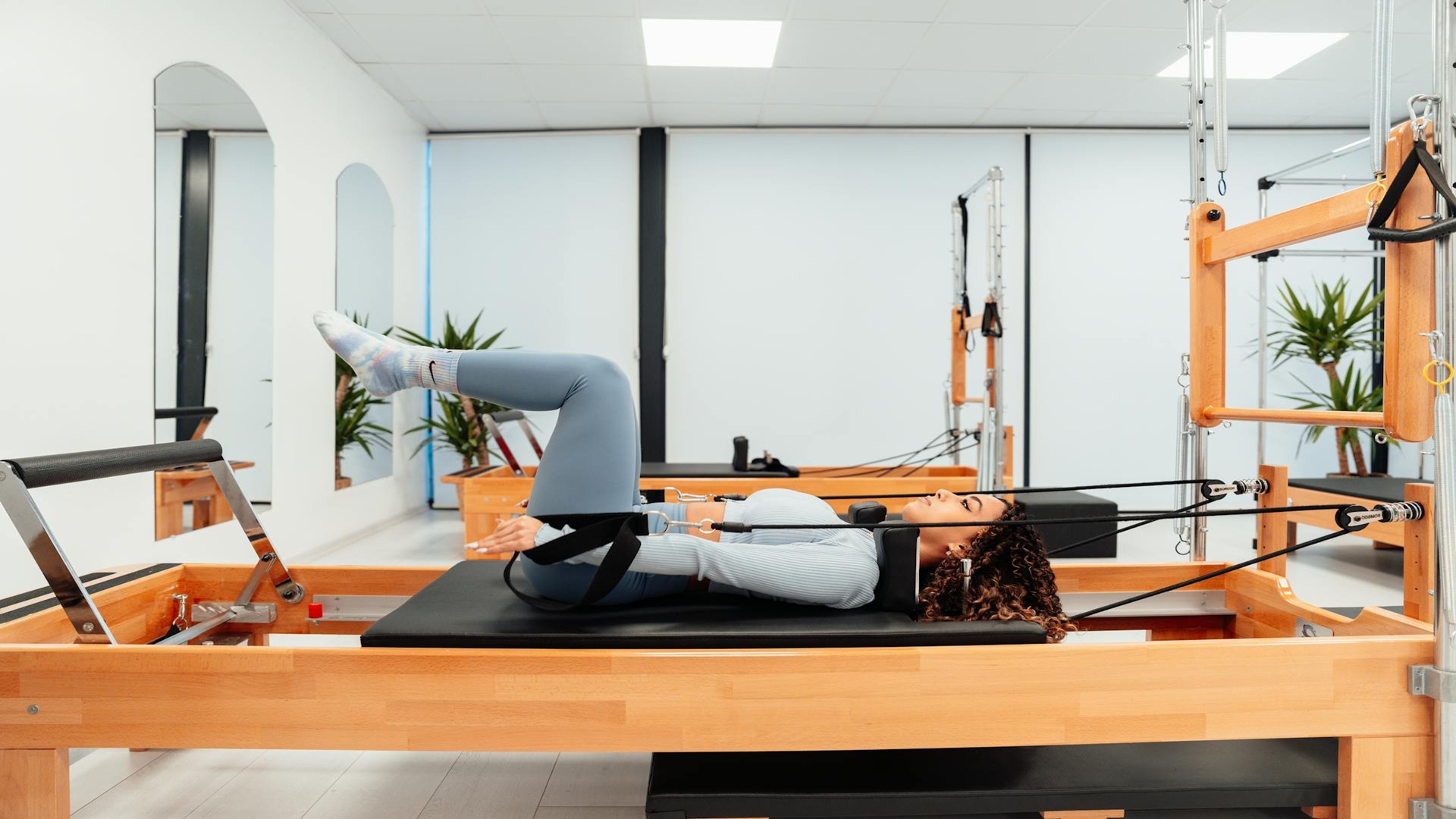
Working your glutes without setting foot in a gym is entirely possible. As long as you know the right exercises and stick to them regularly, you'll see results.
Here we will present a complete, progressive approach, suitable for all body types, to sculpt and strengthen your glutes at home .
Why strengthening your glutes is essential for women
Beyond the aesthetic aspect, strengthening the gluteal muscles offers concrete benefits for overall health.
The gluteus maximus, gluteus medius, and gluteus minimus together form one of the most powerful muscle groups in the human body. Their role goes far beyond that of a simple cushion.
These muscles ensure the stability of the pelvis, protect the lower back and facilitate every movement of locomotion.
A study published in the Journal of Orthopaedic & Sports Physical Therapy showed that strengthening the glutes significantly reduces chronic lower back pain in active women.
This is a compelling reason to get started right now.
For women who wear larger sizes or have a generous figure, working the glutes at home offers a supportive environment, free from outside scrutiny.
Progress is made at one's own pace, with exercises adapted to one's own body type. This comfort often plays a decisive role in the regularity of practice.
It is also important to know that the glutes are directly linked to the hamstrings and quadriceps.
Strengthening this area improves the entire posterior muscle chain, which contributes to better posture and a reduction in daily joint pain.
Understanding gluteal anatomy for better training
Before starting a home glute workout program, it's helpful to understand what you're trying to work on. The glutes are made up of three distinct muscles, each with a specific role.
The gluteus maximus , or large gluteal muscle , is the most voluminous. It plays a role in hip extension, particularly during squats and deadlifts. It is responsible for giving this area its visible shape and roundness.
The gluteus medius , or gluteus medius , is located on the side of the hip. It stabilizes the pelvis during walking and unilateral movements. Its activation is essential to prevent postural imbalances.
The gluteus minimus , or small gluteal muscle , is located beneath the gluteus medius. It plays a role in hip abduction and internal rotation.
Often overlooked in traditional programs, it nevertheless deserves special attention to achieve balanced and strong glutes.
Understanding these three zones allows you to choose the right exercises and vary your training approach for harmonious development. That's exactly what we'll do in the rest of this article.
Essential exercises to tone your glutes without equipment
The good news is that some of the most effective exercises require no equipment. Body weight is enough to generate sufficient muscle tension, especially at the beginning of a program.
The classic squat and its variations
The squat remains the king of exercises for toning and developing the glutes . It simultaneously works the gluteus maximus, quadriceps and hamstrings.
To perform it correctly, you spread your feet shoulder-width apart, with your toes slightly turned outwards.
Next, lower yourself by pushing your hips back, as if you were sitting on an invisible chair. Keep your back straight and your knees below your toes. We recommend starting with 3 sets of 15 repetitions.
The sumo squat is a very interesting variation. The feet are wider apart, with the toes pointed at a 45-degree angle. This position targets the inner thighs and lower glutes more.
For women who naturally have wide hips, this variation can be particularly effective .
The squat pulse , which involves holding the squat position and making small movements of a few centimeters, intensifies muscle burn without changing exercises. Excellent for finishing a set.
The front, side, and reverse slots
Lunges are unilateral exercises that are particularly effective for sculpting the glutes asymmetrically . They correct muscle imbalances between the two legs and improve overall stability.
The classic forward lunge is performed by taking a large step forward, bending both knees to 90 degrees. The back knee lightly touches the ground without actually touching it. Return to the starting position by pushing off with the front heel.
The lateral lunge, on the other hand, works the gluteus medius and inner thighs more. You take a large step to the side, bending your supporting leg while keeping the other leg straight.
This variant is often overlooked, even though it offers valuable complementary work.
We suggest alternating these three types of lunges in a circuit: forward, lateral, and reverse . Each type targets a different portion of the glutes.
This principle of variation is fundamental to avoiding stagnation and continuing to progress.
The glute bridge and the hip thrust on the floor
The glute bridge is one of the most direct exercises for isolating the gluteus maximus. Lie on your back with your knees bent and your feet flat on the floor.
Next, lift your pelvis by contracting your glutes until you form a straight line between your shoulders and knees.
The key lies in maximum contraction at the top of the movement. We recommend holding the top position for two seconds before lowering.
This maximizes the time under muscle tension, a determining factor for muscle fiber growth.
The floor hip thrust is a more amplified version of the glute bridge. The back rests on a sofa or low bench, which increases the range of motion.
This variant is particularly recommended for women who want a targeted and intense workout without needing expensive equipment.
These exercises are all the more accessible because they require no special equipment. A floor mat is all you need to start seeing concrete results.
Donkey kicks and fire hydrants
These floor exercises are often associated with women's muscle-strengthening programs, and rightly so.
The donkey kick is performed on all fours: one leg is pushed upwards and backwards while keeping the knee bent at 90 degrees.
The movement directly targets the gluteus maximus.
The fire hydrant , on the other hand, involves raising the leg to the side from the same starting position. It targets the gluteus medius and improves hip mobility.
Together, these two exercises form a complementary duo that we systematically integrate into our home training sessions.
To intensify these movements without going to a gym, simply add a resistance band around your thighs or ankles.
This affordable accessory radically changes the level of difficulty and accelerates progress, even for those with larger body shapes for whom body weight is already a challenge in itself.
Create an effective program to work your glutes at home
Consistency is the cornerstone of any home glute workout program. Without planning, even the best intentions quickly fade away.
We offer a structured framework that can be adapted to all levels.
Recommended training frequency and volume
According to the recommendations of the American College of Sports Medicine (ACSM), a muscle should be worked at least twice a week to progress.
For the glutes, three weekly sessions are ideal to stimulate muscle growth without overloading recovery.
Each session can last between 30 and 45 minutes, which is perfectly compatible with a busy daily routine. Quality always takes precedence over quantity : three well-executed sessions are better than one long, rushed session at the end of the week.
We propose structuring the week as follows: a session focused on squats and lunges on Monday, a session of glute bridges and floor exercises on Wednesday, and a more intense mixed session on Friday.
Rest days allow muscle fibers to regenerate and strengthen.
An example of a typical workout to sculpt your glutes
Here is a practical workout we recommend for women starting out with glute strengthening at home :
Warm-up (5 minutes) : marching in place, hip rotations, high knees. This phase prepares the joints and activates circulation.
Main workout : 3 sets of 15 classic squats, 3 sets of 12 forward lunges per leg, 3 sets of 20 glute bridges with high contraction, 3 sets of 15 donkey kicks per leg, 3 sets of 15 fire hydrants per leg.
All this with 45 seconds of rest between each set.
Cool-down (5 minutes) : stretches for the glutes, piriformis, and hamstrings. This phase is often neglected, but it reduces soreness and improves flexibility in the long term.
Over the weeks, we gradually increase either the number of repetitions, the duration of the contractions, or the intensity using resistance bands.
This principle of progressive overload is the driving force behind all sustainable muscle development.
Nutrition and recovery: the invisible allies of muscle development
Many women focus solely on training and neglect two equally essential pillars: nutrition and recovery . Yet, without these two elements, results inevitably stagnate.
Nutritional intake to promote gluteal growth
Muscles need protein to rebuild themselves after exercise.
A daily intake of 1.6 to 2 grams of protein per kilogram of body weight is recommended for women who engage in strength training. This is a well-established scientific fact.
Good sources of protein include eggs, chicken, tofu, legumes, and cottage cheese. These foods are readily available, inexpensive, and easily incorporated into everyday cooking.
There's no need to resort to expensive dietary supplements to get started.
Complex carbohydrates also play a key role. They provide the energy needed for workouts. Brown rice, oats, and sweet potatoes are excellent choices to support physical exertion and prevent premature fatigue.
Lipids, often wrongly feared, participate in hormonal production, particularly estrogen and testosterone, which are essential for female muscle synthesis.
Avocado, nuts and olive oil deserve a regular place on the plate.
The importance of sleep and rest days
Muscle growth doesn't occur during training, but during recovery. Sleep is the ultimate rebuilding phase.
Studies have confirmed that chronic sleep deprivation reduces muscle protein synthesis and increases the production of cortisol, the stress hormone.
We recommend sleeping between 7 and 9 hours per night to optimize the results of a home glute toning program. This is not a luxury; it is an essential physiological requirement.
Active rest days, such as light walking or gentle stretching, help maintain blood circulation without overworking the recovering muscles.
This type of gentle activity is particularly well suited to women who are starting their muscle-strengthening journey at home.
Common mistakes to avoid when working your glutes at home
Even with the best intentions, certain mistakes recur regularly and hinder progress. Identifying them allows you to avoid them from the outset.
The first mistake is not consciously contracting the glutes while performing exercises. Without this mental connection, it's often the quadriceps or lower back muscles that compensate.
This focus on the target muscle, known as the neuromuscular connection , is crucial for the effectiveness of each movement.
The second mistake is monotony. Repeating the same exercises indefinitely leads to a phenomenon of muscular adaptation: the body becomes too efficient for a given movement and ceases to progress.
Varying the exercises, angles and loads helps to bypass this plateau.
The third mistake concerns the range of motion. Many people perform half-movements to make the exercise easier. However, working through a full range of motion engages more muscle fibers and produces better results.
It is better to do fewer repetitions with good form than many with poor technique.
The fourth mistake is underestimating the importance of unilateral exercises.
Working one leg at a time, as in lunges or single-leg bridges, corrects left-right imbalances often present in women with asymmetrical body shapes.
These exercises are also more demanding and therefore more effective in stimulating progress.
Useful accessories to intensify your glute workout at home
While bodyweight exercises are sufficient to begin with, a few affordable accessories can take glute muscle development to the next level. There's no need to invest hundreds of euros to see a difference.
Resistance bands , or mini-bands, are undoubtedly the most useful accessories. Available for under 15 euros, they are used around the thighs or ankles to increase resistance during squats, glute bridges, or abductions.
Their effect on the activation of the gluteus medius is particularly noticeable.
Light dumbbells , between 2 and 8 kilos, allow you to add resistance to goblet squats or lunges. For women who have been training for several weeks and want to intensify their program, it's a wise investment.
A pair of versatile dumbbells covers most needs.
The gym ball , or Swiss ball, offers interesting possibilities for varying glute bridge exercises. By placing your feet on the ball during a hip thrust, you increase instability and recruit more stabilizing muscles.
This is an additional challenge that results in increased muscle activation.
Finally, a good non-slip exercise mat is essential for comfortable training. Comfort directly influences consistency .
When the training environment is pleasant, it is easier to stick with it in the long term.
Track your progress and stay motivated over time
One of the biggest challenges in a home glute workout program isn't technical; it's consistency. How do you stay motivated week after week?
Keeping a training log is a simple and effective method. You note the exercises performed, the number of sets and repetitions, as well as the sensations felt.
This written record allows progress to be measured objectively and the program to be adjusted according to the results.
Taking follow-up photos every four weeks, in the same light and with the same clothes, provides a concrete visual comparison.
Bodily changes are often gradual and difficult to perceive on a daily basis. Seeing the progress in pictures provides renewed momentum when motivation wanes.
Setting short-term goals is also very effective. Rather than aiming for an abstract overall result, focus on specific milestones: holding a sumo squat for 30 seconds, adding two repetitions per set, or mastering a new exercise.
These small, regular victories build the mental momentum needed to persevere.
For women with generous body types or who are resuming physical activity after a break, celebrating each step forward without comparing themselves to others is a fundamental attitude.
Each body progresses at its own pace, and that's perfectly fine.
Strengthening your glutes at home: a practice accessible to all women
As we have seen throughout this article: building your glutes at home requires neither sophisticated equipment, nor a gym, nor a large budget.
What we need is sufficient space, a few dozen minutes per week, and a structured approach.
The benefits go far beyond visual appeal. Strong buttocks improve posture, protect the back, stabilize the pelvis, and facilitate everyday movements.
It's an investment in her long-term health , not just her appearance.
For women who wear larger sizes or have a curvy figure, working out at home offers total freedom . No outside gaze, no comparisons possible, just yourself and your goals.
Sometimes it's the best environment for genuine progress.
The exercises presented here, from the classic squat to the hip thrust, including donkey kicks and lateral lunges, cover all the gluteal muscle fibers .
By combining them intelligently, eating properly, and giving your body the rest it deserves, results will come. Not in a few days, but in a few weeks of regular and committed practice.
Consistency is key. Three sessions per week, done correctly, are enough to transform your figure in a few months.
Start modestly, progress patiently, celebrate sincerely: this is the formula that works for all women, regardless of their starting point.